
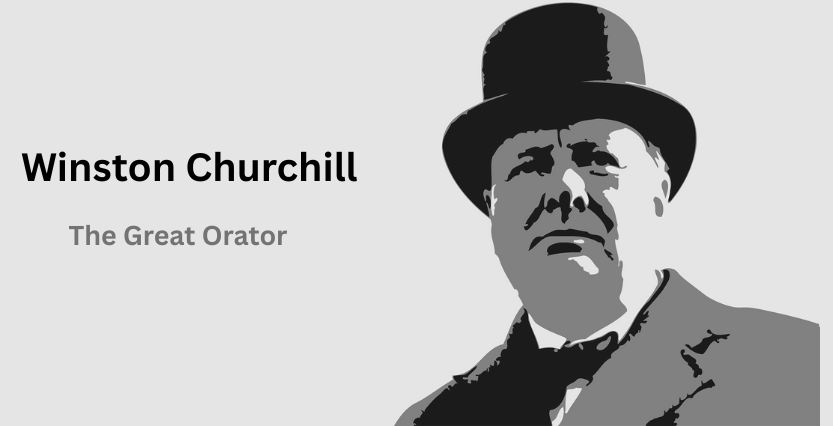
Winston Churchill is remembered not only as a wartime leader but also as one of the greatest public speakers of all time. His speeches were carefully prepared, powerfully delivered, and filled with language that stirred people to action.
Even though he had a slight speech impediment, Churchill turned it into a strength. He used pauses, rhythm, and clear phrasing to make every word count. He wrote his own speeches, often laying them out in a “poem style” to remind himself where to pause and emphasise.
Churchill treated speeches as performances. He varied his voice, used silence for effect, and added expression and gesture to bring his words to life. He drew on history, the Bible, and classical literature, but also spoke in a way that ordinary people could understand and feel deeply.
His ability to connect with people was vital during the Second World War. Churchill gave hope, courage, and determination when Britain needed it most.
Some of Churchill’s most famous speeches include:
- “Blood, Toil, Tears and Sweat” (1940): His first speech as Prime Minister, calling the nation to courage.
- “We shall fight on the beaches” (1940): A vow that Britain would never surrender.
- “Victory in Europe Day” (1945): His words of triumph at the war’s end.
What We Can Learn from Churchill’s Style
Churchill’s speeches still have lessons for anyone who wants to be a better speaker today:
- Prepare carefully: Great speeches don’t just happen. Churchill wrote and rewrote his speeches until every word earned its place.
- Use pauses and rhythm: Silence can be powerful. A well-timed pause lets your audience absorb your words.
- Turn weakness into strength: Churchill had a slight lisp, but he slowed down and controlled his delivery, making his words more deliberate and effective.
- Choose vivid language: Strong images, analogies, and memorable phrases stay with people long after the speech is over.
- Make it a performance: A speech is not just read, it’s delivered. Use your voice, face, and presence to bring the message alive.
- Connect emotionally: Churchill spoke to people’s fears and hopes, lifting them up in difficult times.
His example shows that public speaking is both a craft and an art – one that combines preparation, performance, and heart.
Churchill’s oratory shows us that great speeches are not only written, they are performed, remembered, and capable of inspiring generations.
Need some help to prepare a special occasion speech or business presentation?


