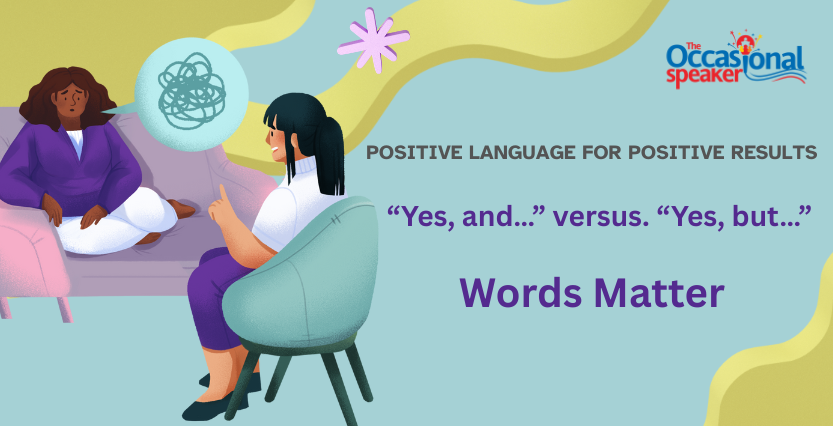
Have you ever made a suggestion where someone has responded, “Yes, but…”?
It’s like your idea has been rejected; your contribution has been devalued and dismissed.
Now imagine if that same person had responded, “Yes, and…”. You would have been pleased that your contribution was acknowledged and valued.
This small change in wording can make a big difference.
Why Words Matter
The words we choose shape how others respond emotionally.
- Positive words encourage connection, cooperation, and trust.
- Negative words can shut people down, even if that’s not what you intended.
When you’re giving a speech, leading a team, or even chatting with friends, your words can either open doors, or close them.
The Problem with “Yes, but…”
On the surface, the words, “Yes, but” sound like agreement, but in reality, it’s an abrupt, if polite “no.”
Examples:
- “Yes, but that won’t work here.”
- “Yes, but we’ve tried that already.”
Even if you mean well, the word “but” cancels out whatever came before. It communicates an objection. It leaves people feeling dismissed, and it can bring conversations to a halt.
The Power of “Yes, and…”
“Yes, and” is a little phrase with big impact. Instead of blocking an idea, it opens the opportunity to build on it.
Examples:
- “Yes, and we could try it in a smaller way first.”
- “Yes, and maybe we can combine it with another idea.”
This shows you’ve listened and that you value the other person’s contribution. The result? People feel encouraged, not rejected.
Positive Language in Everyday Life
Changing a single word can change the whole tone of a conversation.
Try these swaps:
- “Yes, but…” 👉 “Yes, and…”
- “We can’t do that…” 👉 “Here’s what we can do…”
- “That won’t work…” 👉 “Let’s try it this way…”
Whether you’re speaking to an audience, working in a team, or talking with friends, these small shifts make you sound more open, confident, and solution-focused.
Try It Yourself!
Here are three quick steps to practise:
- Notice how often you use “but.”
- Swap it for “and” where you can.
- Reframe negative statements into positive ones.
It might feel odd at first, but the more you do it, the more natural, and effective, it becomes.
“Yes, but” tends to close doors. “Yes, and” opens them.
By choosing positive language, you’ll find your conversations run more smoothy and you’ll create an environment where others feel their ideas are valued.
Want to Learn More?
If you’d like to explore this further, join our course:
“Positive Language for Positive Results”
It’s full of practical tips to help you replace limiting words with empowering ones. You’ll communication with confidence, build connections and a sense of teamwork and cooperation.